"Everything we build starts with design engineering. CECL manufactured boards for one of our products. It went perfectly – a real success.It is really an high quality service they have provided to us!"
By Nile Smith from Sinotech Inc.
“We had several very old device with obsolete boards need to be replaced –through CECL professional service.We got what we needed, and we’ve been using the results of the work without any problem till now.”
By Richard Anderson from TWP system Inc.
"Guys from CECL manufacture PCBs we use in one of our products, a clinometer and we’ve never had a problem with anything. The boards come in, they work. And, their team is very responsive."
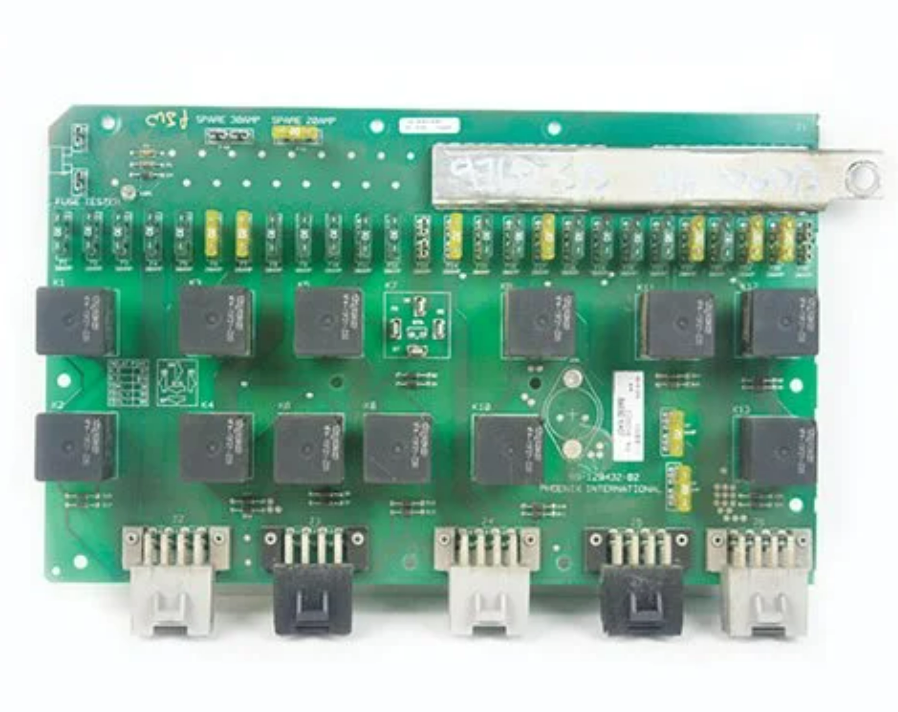
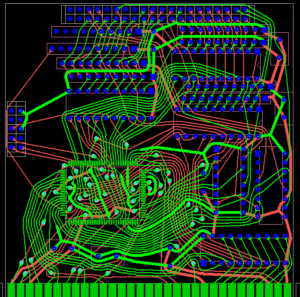
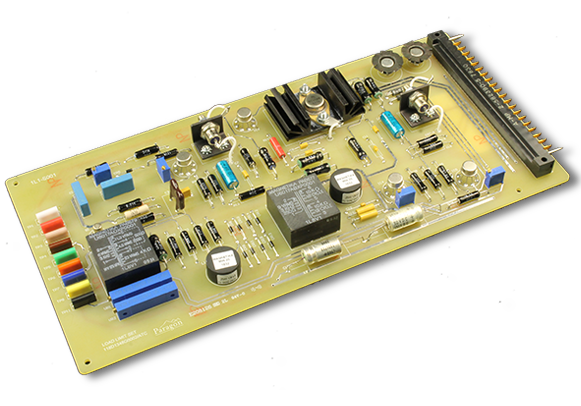
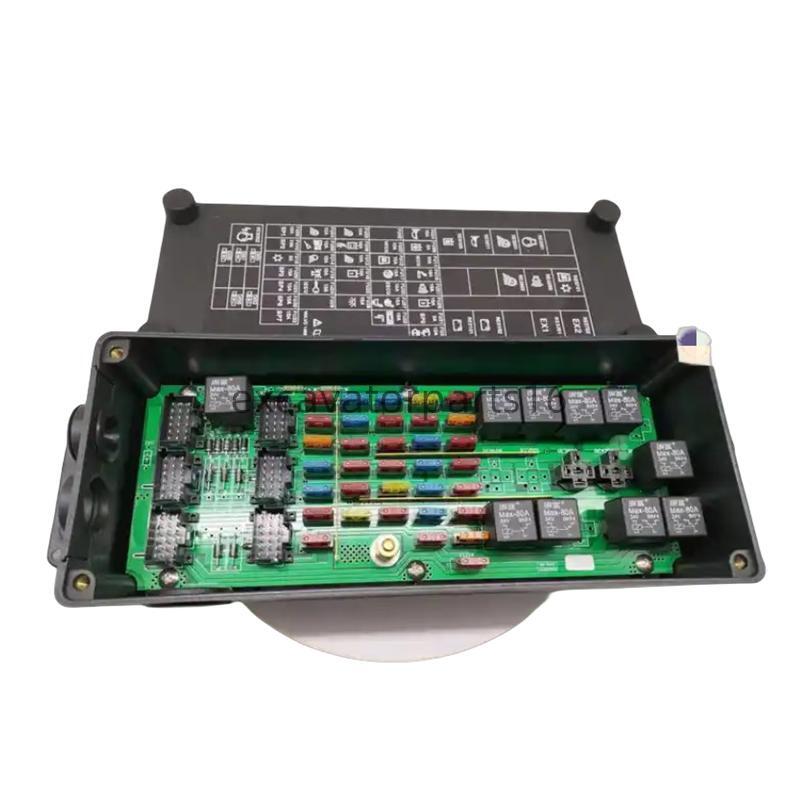
PWB Reverse Engineering Consider EMC’s Grounding is a critical engineering practice when dealing with hydraulic control boards used in excavators, especially those regulating solenoid valves, proportional actuators, and sensor feedback loops. These boards operate in electrically noisy environments, so any reverse engineering workflow must address electromagnetic compatibility from the very beginning. The process begins by carefully inspecting the original PWB to recover and restore essential data sets: the Gerber file, schematic diagram, layout drawing, BOM list, and netlist, each of which forms the foundation for accurate redesign.
Die EMV-Erdung beeinflusst direkt das Ansprechverhalten von Ventilen und die Stabilität der Aktuatorschleife. Ingenieure, die Leiterplatten-Reverse-Engineering betreiben, müssen daher jede Masseverbindung, jeden Abschirmbereich, jeden Rückleitungspfad und jede Durchkontaktierung erfassen, bevor sie versuchen, das Layout zu klonen oder zu kopieren. Diese Details werden anschließend in die Engineering-Datenbank übernommen, um den Signalfluss zwischen Mikrocontrollern, Drucksensoren und Hochstromtreiberstufen präzise nachzubilden. Sobald die logischen und physikalischen Details dupliziert sind, überarbeitet das technische Team alle Abschnitte, die eine verbesserte Erdung oder Entkopplung erfordern. Nach der vollständigen Dokumentation beginnt die Fertigungsvorbereitung. Die aktualisierte Gerber-Datei und die Netzliste werden unter Berücksichtigung der EMV-Anforderungen validiert, um eine kontrollierte Impedanz für kritische Rückkopplungsleitungen und induktivitätsarme Rückleitungen für Magnetventiltreiber sicherzustellen. Anschließend wird eine neue Leiterplatte anhand der wiederhergestellten Daten gefertigt. In dieser Phase bewerten die Ingenieure die Kupferdicke, die Segmentierung der Massefläche und die Durchkontaktierungsdichte, um die Robustheit in realen Baggerumgebungen zu gewährleisten.
Because EMC grounding directly affects valve response timing and actuator loop stability, engineers performing PWB reverse engineering must map every ground reference, shielding area, return path, and stitching via before attempting to clone or copy the layout. These details are then recreated into the engineering database to accurately replicate the signal flow between microcontrollers, pressure sensors, and high-current driver stages. Once logical and physical details are duplicated, the technical team proceeds to redesign any sections that require improved grounding or noise isolation.
In the PWB reverse engineering, grounding is a very important measure to prevent the noise and prohibit the interference. The grounding method should be different due to the variation of circuit, the crosstalk among different circuit when reverse engineering PWB can be reduced or eliminated through correct grounding. There are two main grounding methods on PWB reverse engineering: single point grounding and multi-point grounding.
After documentation is fully reproduced, manufacturing preparation begins. The updated Gerber file and netlist are validated with EMC constraints in mind, ensuring controlled impedance for critical feedback traces and low-inductance return loops for solenoid drivers. A newly fabricated bare PWB is then remanufactured according to the restored data. At this stage, engineers evaluate copper thickness, ground-plane segmentation, and via density to maintain robustness in real-world excavator environments.
La mise à la terre CEM influe directement sur le temps de réponse des vannes et la stabilité des boucles d’actionnement. Lors de la rétro-ingénierie des cartes de circuits imprimés (PCB), les ingénieurs doivent cartographier chaque référence de masse, zone de blindage, chemin de retour et via de raccordement avant de cloner ou de copier le schéma. Ces détails sont ensuite recréés dans la base de données d’ingénierie afin de reproduire fidèlement le flux de signal entre les microcontrôleurs, les capteurs de pression et les étages de commande à courant élevé. Une fois les détails logiques et physiques dupliqués, l’équipe technique procède à la reconception des sections nécessitant une mise à la terre ou une isolation contre le bruit améliorées. Après la reproduction complète de la documentation, la préparation de la fabrication commence. Le fichier Gerber et la netlist mis à jour sont validés en tenant compte des contraintes CEM, garantissant une impédance contrôlée pour les pistes de rétroaction critiques et des boucles de retour à faible inductance pour les pilotes de solénoïdes. Une carte de circuit imprimé nue est ensuite fabriquée à partir des données restaurées. À ce stade, les ingénieurs évaluent l’épaisseur du cuivre, la segmentation du plan de masse et la densité des vias afin de garantir la robustesse dans les environnements réels d’une excavatrice.
Component procurement follows the verified BOM list, ensuring each part meets vibration, temperature, and load-cycle requirements. In cases where obsolete drivers or specialized sensors cannot be sourced, equivalent components may be carefully selected and the design refurbished to maintain electrical performance. Assembly of the PWB must respect grounding zones, high-current isolation, and sensor-signal routing, as even slight deviations can introduce EMI interference into hydraulic control loops.
Converting the restored documentation into actual production requires strict attention to EMC, thermal rise, and transient suppression. Manufacturers must verify that every layer stack-up, ground pour, and shielding structure matches the intended redevelopment plan. Any inconsistency could cause unstable valve operation or erratic actuator feedback.
Under certain circumstance, it is not possible to avoid the interference bring by grounding impedance when reverse engineering PWB, especially when view the grounding impedance as zero in terms of the electronic device is in ideal condition, it is not only the reference point in the signal electrical level, but no decreased pressure in the electronic device when current flow through it, it is a kind of ideal grounding line which never exist in the PWB reverse engineering. Grounding line has resistance and reactance simultaneously, when current flow will definitely has voltage drop down, on the other side, grounding line of PWB reverse engineering can make use of other lines to form the loop back, when the variable magnetic field cross loop back.
Заземлення ЕМС безпосередньо впливає на час відгуку клапана та стабільність контуру виконавчого механізму, тому інженери, які виконують зворотне проектування PWB, повинні зіставити кожне посилання на землю, область екранування, зворотний шлях та зшивання переходів, перш ніж намагатися клонувати або копіювати макет. Ці деталі потім відтворюються в інженерній базі даних, щоб точно відтворити потік сигналу між мікроконтролерами, датчиками тиску та каскадами драйверів високого струму. Після дублювання логічних та фізичних деталей технічна команда переходить до переробки будь-яких секцій, які потребують покращеного заземлення або шумоізоляції. Після повного відтворення документації починається підготовка до виробництва. Оновлений файл Gerber та список з’єднань перевіряються з урахуванням обмежень ЕМС, забезпечуючи контрольований імпеданс для критичних доріжок зворотного зв’язку та зворотні петлі з низькою індуктивністю для драйверів соленоїдів. Потім щойно виготовлена гола PWB переробляється відповідно до відновлених даних. На цьому етапі інженери оцінюють товщину міді, сегментацію заземлюваної площини та щільність переходів, щоб підтримувати надійність у реальних умовах експлуатації екскаватора.
For the reverse engineering PWB with transmitting line length greater than 1/20 of max frequency, can be viewed as high frequency, on the contrary, should be viewed as low frequency of PWB reverse engineering. According to the principle, for the PWB circuit with lower than 1MHZ, it is better to apply single point grounding; as for frequency higher than 10MHZ, multi-point grounding of PWB reverse engineering is preferable. For the frequency among them, so long as the length of longest transmitting line is less than one twentieth of wavelength, single point should be applied to avoid the public resistance coupling.
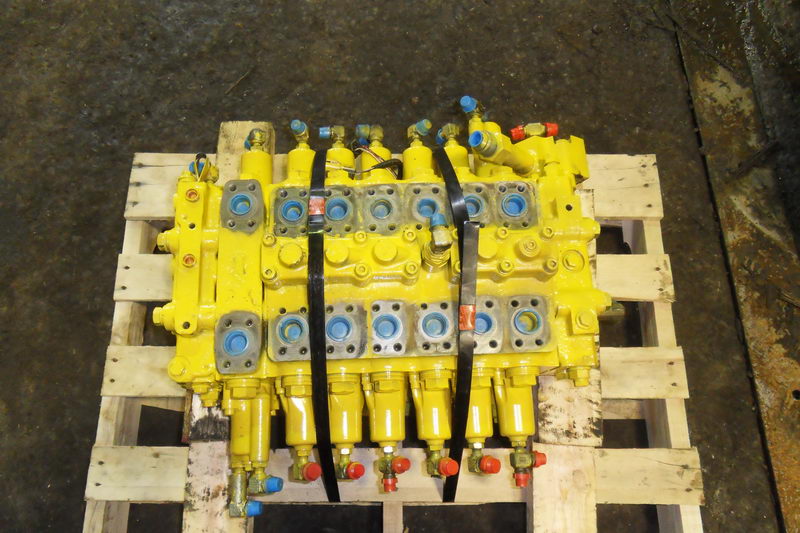
Circuit Engineering Company Limited continues to be recognized as the Southern China Leader in Services for PCB Reverse Engineering, PWB Clone, PWB Copy and PWB Replicate. With the advancement of today’s modern circuit board technology, it is more important than ever to have specialists available to help you at a moment’s notice. This reverse engineering approach is essential for maintaining excavator hydraulic control boards, ensuring long-term equipment availability, and supporting redevelopment of discontinued systems. Challenges may arise from multilayer grounding structures, buried vias, or proprietary analog conditioning circuits, but experienced engineering teams can overcome these issues with disciplined analysis.
La conexión a tierra EMC afecta directamente la sincronización de respuesta de la válvula y la estabilidad del bucle del actuador. Los ingenieros que realizan ingeniería inversa de la placa de circuito impreso (PWB) deben mapear cada referencia de tierra, área de blindaje, ruta de retorno y vía de unión antes de intentar clonar o copiar el diseño. Estos detalles se recrean en la base de datos de ingeniería para replicar con precisión el flujo de señal entre microcontroladores, sensores de presión y etapas de controlador de alta corriente. Una vez duplicados los detalles lógicos y físicos, el equipo técnico procede a rediseñar cualquier sección que requiera una mejor conexión a tierra o aislamiento de ruido. Una vez reproducida la documentación completa, comienza la preparación para la fabricación. El archivo Gerber y la lista de conexiones actualizados se validan teniendo en cuenta las restricciones EMC, lo que garantiza una impedancia controlada para las pistas de retroalimentación críticas y bucles de retorno de baja inductancia para los controladores de solenoide. Una placa de circuito impreso (PWB) nueva se refabrica según los datos restaurados. En esta etapa, los ingenieros evalúan el espesor del cobre, la segmentación del plano de tierra y la densidad de vías para mantener la robustez en entornos de excavadoras reales.
Tags: kopieren pcb bom,kopieren pcb drawing